To find self-compassion, know your self-critic.
I’ve been contemplating how to truly embody and practice self-compassion in our lives. Being kind to ourselves sounds so easy but it can feel so hard.
Kristin Neff PhD, a self-compassion researcher, defines self-compassion as having three components: self-kindness, common humanity, and mindfulness.

“Self-compassion entails three main components: (a) self-kindness—being kind and understanding toward oneself in instances of pain or failure rather than being harshly self-critical, (b) common humanity—perceiving one’s experiences as part of the larger human experience rather than seeing them as separating and isolating, and (c) mindfulness—holding painful thoughts and feelings in balanced awareness rather than over-identifying with them.” - Kristin Neff, 2023.
For me, all three of Neff’s components of self-compassion are ‘easier said than done’; while I can intellectually understand them, it’s sometimes hard for me to remember to practice them especially when I desperately need self-compassion in my life. Recently I’ve been thinking about how being able to access the first component of self-compassion - self-kindness - requires us to get to know the part of ourselves that can block it: self-judgement. It’s actually that sneaky self-critic with whom many of us are so familiar (and may know far better than our self-compassionate/kind parts) that we need to turn towards. How can we ask the self-critic to stop blocking our access to self-compassion if we don’t yet understand why it is in our lives? I have found that to bring more self-compassion into my life it is critical to develop an understanding of my self-critic.
While the self-judging and self-compassionate parts may seem entirely at odds with each other, I believe that they each have our best interests at heart. When we are able to turn toward them, we may even be able to have them work together to support us.

Would you be willing to get to know your self-critic/judge?
A tool for getting to know our inner parts that I absolutely love is the Persona Interview from the Hendricks Institute & Colwell Practice.
I invite you to try it out in the following way:
Grab your journal or a friend to be your interviewer, and download the Persona Interview.
Take a deep breath or two. See if you can access a few handfuls of humor or silliness.
Imagine your self-critic. What would they look like? What would they wear? What type of body posture and facial expression would they hold?
Choose a name for your self-critic. I always find alliteration to be fun, for example: Critical Crista, Judgy John, etc. Sometimes a name can be as simple as Self-Critic or The Judge.
Step into the role of your self-critic using posture, facial expression, and maybe some props (inner work is allowed to be fun!) as identified above in step 3. Ask your usual self to step aside to observe so that you can fully be in the role of your self-critic. Don’t hold back.
Have a friend ask you the interview questions or write the answers in your journal. Notice if you shift out of the role, then see if you can step back in.
Before ending the interview, offer some gratitude to your self-critic. I’m imagining you may have discovered that it showed up for a reason and is still trying to protect you? Maybe invite your self-critic to step back from the way it’s been functioning in your life and/or step into a new role to support you.
After ending the interview, share or write some reflections from your true self about what it was like to observe this interview.
Give yourself a pat on the back for your bravery of turning toward your self-critic.
Celebrate! Maybe turn on a favorite song and dance, give yourself a hug, or say an affirmation to remind yourself how cool you are!
I’d love to know what you think of this process! The same interview can be used to get to know your self-compassion part. I’ve found that starting with the self-critic can be helpful because it is then more likely to give you space to get to know the other parts of yourself. Maybe you can even invite these two parts to have a conversation! It can also be helpful to work with a therapist or coach to deepen the understanding of these inner parts. We’ll also be exploring similar practices in the Tangible Self-Compassion workshop on May 16th if you’d like to join us then!
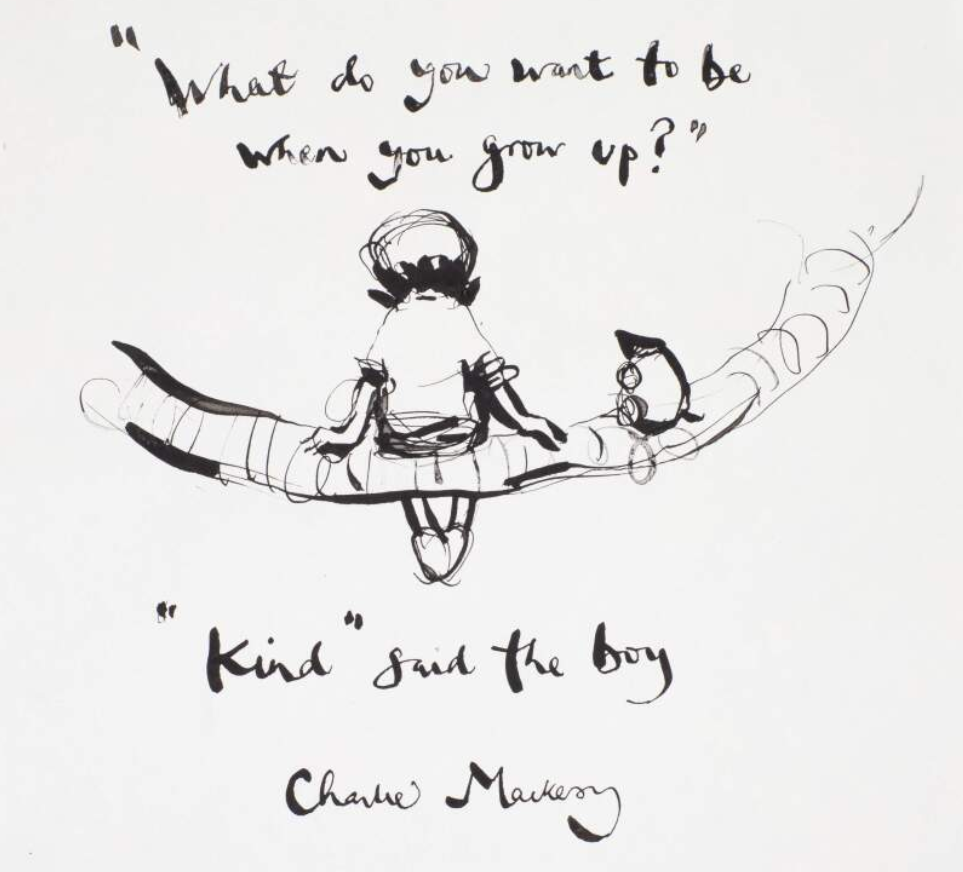
The other components of self-compassion are equally as important and valuable, especially in our world today. I think about self-compassion as a practice, like yoga or playing an instrument or brushing our teeth. We don’t get a one-time download of self-compassion but rather the more we practice the easier it is to access the neural pathways of self-compassion on a daily basis.
To foster deeper self-compassion, here are some of my other favorite self-compassion related practices:
Find a moment each day to write down or share with another something you are proud of and something you appreciate, big or small!
Set a notification or alarm on your phone with an affirmation, self-compassionate phrase, or favorite kindness quote that will pop up once a day (or more!). My current one is: “I have no idea just how good my life can be - and I’m on the road to find out.”
Use Kristin Neff’s Self-Compassion Break.
Put a sticky note with an affirmation or self-kindness phrase on your bathroom mirror, next to the coffee pot, on the dashboard of your car, or anywhere else you’ll see it daily. Or hide them around the house to find randomly!
Write yourself a letter from your self-compassionate/self-kindness part.
Write a gratitude letter to your self-critic.
Create your own daily self-compassion ritual that feels right for you!
If you try any of these out or have some of your own, please let me know. I love learning and growing together!